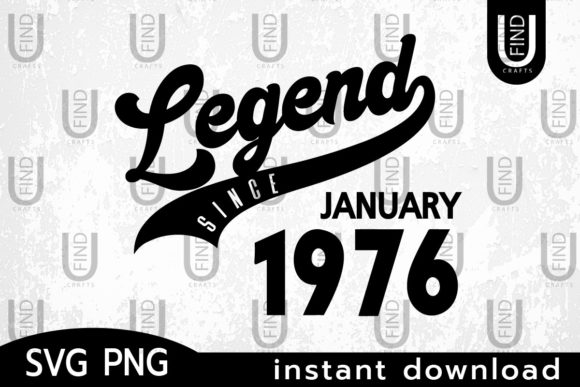
Vintage 1976, Legend Since January 1976
As a designer who spends hours testing digital assets on actual embroidery machines, I often find myself skeptical of designs that rely too heavily on nostalgia. However, when I first opened the files for Vintage 1976, Legend Since January 1976, I knew this was different. It isn't just another retro font file; it carries a specific weight and character that feels authentic to the era it references. For anyone looking to add a touch of classic style to their handmade products or personal projects, this design offers a compelling starting point.
The immediate visual appeal lies in its typography. The phrase "Legend Since January 1976" evokes a sense of enduring quality and established history. In the world of machine embroidery design, where thread thickness can sometimes soften letterforms, this layout manages to maintain clarity while offering that distinct vintage flair. It is the kind of graphic that works exceptionally well as a statement piece on custom apparel or a subtle nod to heritage on baby items.
Putting the Design to the Test: A Real-World Scenario
To truly understand how Vintage 1976, Legend Since January 1976 performs, I decided to simulate a real client project rather than just staring at a screen. Imagine you are an Etsy seller preparing a collection of boutique gifts for a customer celebrating a milestone birthday. You want something that feels personal but also professional enough to command a higher price point. This is where the design shines.
I selected a heavy-weight cotton canvas tote bag as my test substrate. Tote bags are a staple in the craft business, but they present unique challenges regarding fabric texture and stability. When I imported the embroidery file into my digitizing software, the initial preview looked promising. The curves of the letters were smooth, suggesting a good balance between satin stitch and fill stitch areas. However, before committing to the final product, I ran a test run on scrap fabric.
The result was impressive. On the textured canvas, the design didn't get lost in the weave. Instead, the vintage aesthetic complemented the rugged nature of the material. The text "Legend Since January 1976" stood out with excellent definition. If I had chosen a lighter, sheer fabric, the density might have been an issue, but on a sturdy tote, the stitch density held up perfectly. This suggests that the design is versatile enough for various home decor items like pillow covers or kitchen towels, provided the base fabric has some substance.
Performance Across Different Embroidery Projects
While the tote bag was a success, the true value of a digital embroidery file lies in its adaptability. Here is how Vintage 1976, Legend Since January 1976 translates to other common use cases for small business owners and hobbyists alike.
- Sweatshirt Embroidery: This design fits naturally on the chest pocket area or across the back of a crewneck sweatshirt. The retro vibe pairs beautifully with heather grey or muted earth tones, creating a look that appeals to both Gen Z and Millennials. The text is long enough to create a strong horizontal line without overwhelming the garment.
- Baby Embroidery: For personalized gifts, this design is perfect for onesies or nursery blankets. Parents love items that mark significant dates. The phrase "Legend Since January 1976" could be easily adapted (digitally) to any year, making it a flexible asset for a shop owner selling custom birth announcements or milestone gifts.
- Apparel Decorators: For those working with caps or hats, caution is required. While the design looks great flat, the curvature of a cap can distort the text if the hoop size isn't adjusted correctly. It is best suited for larger patches or front-center placements on structured caps.
- Craft Business Merchandise: If you are selling finished goods, this design adds a layer of perceived value. A simple apron embroidered with this motif immediately looks more curated and less mass-produced. It signals to the buyer that care was taken in the creation process.
Navigating Potential Pitfalls
No design is without its limitations, and understanding where Vintage 1976, Legend Since January 1976 might struggle is crucial for maintaining your reputation as a professional maker. One area to watch closely is small hoop sizes. If you attempt to shrink this design down to fit a tiny patch or a child's hat, the details in the lettering may become muddy. The spacing between characters is intentional, and compressing it can lead to thread breaks or a loss of legibility.
Fabric choice is another critical factor. While it works wonders on stable cottons and denim, applying this design to stretchy knits or thin synthetics without proper stabilizer can result in puckering. The vintage style relies on clean lines, and any distortion from a loose fabric will ruin the intended aesthetic. Always test on a scrap piece of the exact fabric you plan to use, especially if it is dark or highly textured.
Additionally, consider the contrast. On dark fabrics, ensure you select thread colors that pop. A light gold or white thread will make the "Legend" aspect stand out, whereas a dark thread might disappear into the background. The design's strength is its boldness, so don't let poor color choices dilute that impact.
Visual Appeal and Customer Trust
In the competitive landscape of online marketplaces, presentation is everything. Using a high-quality design like Vintage 1976, Legend Since January 1976 elevates the perceived professionalism of your brand. Customers are drawn to items that look cohesive and thoughtfully designed. When a shopper sees a well-executed embroidery job with clear, crisp text, they trust the quality of the craftsmanship.
This design also taps into the emotional connection people have with the past. Whether it is a gift for a parent born in 1976 or a trendy item for someone who loves retro aesthetics, the theme resonates. It transforms a simple piece of clothing into a conversation starter. For commercial embroidery projects, this emotional hook can drive engagement and sales, turning a standard product into a memorable keepsake.
Practical Designer Notes for Success
Before you start stitching, there are several technical steps every designer should take to ensure a flawless finished product. First, always review the stitch density in your software. If the design appears overly dense, it may cause issues with thick fabrics or needle breakage. Second, check the hoop size requirements. Ensure your machine can accommodate the dimensions of the design without cropping essential elements.
It is also wise to inspect the small details. Look at the corners of the letters and the serifs to ensure they are defined enough to hold up after washing. Testing the design in black and white mockups can help you visualize how it will look on different colored garments before you even cut the thread. Furthermore, verify whether the design includes a satin stitch border or if it relies solely on fill stitches, as this affects the finish and durability.
Finally, never forget the importance of stabilization. Whether you are using tear-away, cut-away, or adhesive backing, the right support is non-negotiable for achieving the sharp look that Vintage 1976, Legend Since January 1976 promises. By following these guidelines, you can confidently integrate this design into your workflow, knowing it will meet the high standards expected by today's discerning buyers.
Whether you are crafting a heartfelt gift or building a robust line of handmade products, this design offers a reliable foundation. It bridges the gap between nostalgic charm and modern execution, making it a valuable addition to any crafter's toolkit. With careful planning and attention to detail, Vintage 1976, Legend Since January 1976 can become a standout feature in your next embroidery project.