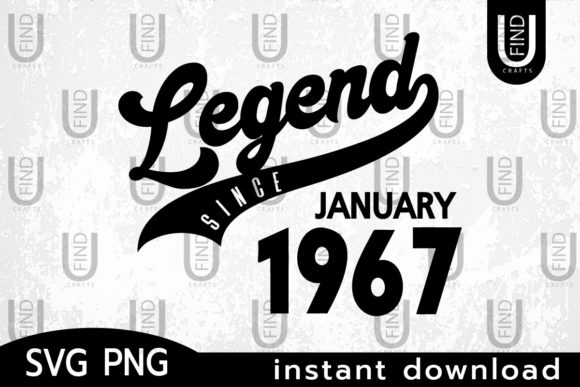
Vintage 1967, Legend Since January 1967
When I first opened the file for Vintage 1967, Legend Since January 1967, I didn't just see a birthday graphic; I saw a ready-made story waiting to be stitched. As someone who has spent years turning digital files into tangible, high-quality embroidery projects, my initial reaction is always practical: does this design hold up under the needle? Does it convey the right mood without looking cluttered or cheap? The answer here is a resounding yes, provided you approach it with the right expectations and technique.
The visual personality of this piece is undeniably nostalgic. It taps into that specific retro aesthetic that feels both timeless and trendy. The typography suggests strength and longevity, perfectly suiting the "Legend" claim. For an embroidery designer, this translates to a design that works exceptionally well on items where heritage and character are key selling points. It isn't just a generic date stamp; it carries a weight that elevates whatever product it adorns.
Real-World Application: From Screen to Stitch
I recently tested this design concept for a custom project involving a heavy-duty canvas tote bag intended as a gift for a client celebrating their 57th birthday. The goal was to create something that felt like a boutique item rather than a mass-produced souvenir. When I loaded the Vintage 1967, Legend Since January 1967 file into my digitizing software, the layout immediately suggested itself for a left-chest placement or a centered back print on a sweatshirt. However, the true test was how the stitches would interact with the fabric texture.
On the sturdy canvas, the design shone. The contrast between the thread and the dark fabric created a crisp, professional finish. The text remained legible even at a moderate size, which is often a struggle with intricate vintage styles. If you are an Etsy seller or a small shop owner looking to expand your inventory, this design fits seamlessly into categories like personalized gifts, holiday merchandise, or anniversary specials. It transforms a standard tote bag into a statement piece that customers are proud to carry.
Consider also the potential for baby items. A onesie embroidered with Vintage 1967, Legend Since January 1967 creates a humorous and heartwarming dynamic when worn by a child whose parent was born in that year. It adds a layer of family connection that simple floral patterns cannot match. Similarly, for kitchen towels or aprons in a rustic home setting, this design acts as a focal point that ties the room's decor together. It feels authentic, not forced.
Where This Design Shines Best
Not every surface is suitable for every design, but there are clear winners for this particular asset. The robust nature of the lettering makes it ideal for:
- Custom Apparel: Heavy cotton t-shirts, denim jackets, and fleece sweatshirts provide the stability needed for a clean finish.
- Tote Bags and Luggage: The durability of the canvas allows for the density required to make the text pop without puckering.
- Holiday Gifts: Christmas stockings or New Year's Eve party favors benefit from the celebratory tone of the design.
- Boutique Branding: Small businesses can use this on tags or labels to evoke a sense of established quality and history.
For commercial embroidery projects, the versatility is high. Whether you are creating a limited run of shirts for a company event or producing a line of handmade products for a craft fair, this design offers a level of sophistication that appeals to a wide demographic. It bridges the gap between hobbyist crafting and professional apparel decoration.
Navigating Technical Challenges
While the design is strong, no machine embroidery file is without its challenges. My experience dictates that we must be realistic about where Vintage 1967, Legend Since January 1967 might struggle. One of the primary concerns is stitch density. If the file contains areas of tight fill stitch, running this on thin fabric or stretchy knit material could result in significant puckering. To avoid ruining a customer's garment, always ensure you are using the correct stabilizer—cut-away is usually necessary for heavier designs on knits.
Another critical factor is hoop size. If you attempt to embroider this on a very small patch or a curved surface like a baseball cap, the curvature can distort the letters. The spacing between the words "Legend" and "Since" might get compressed if the hoop doesn't allow enough room for the natural tension of the threads. I recommend testing the design on scrap fabric first to check the alignment. If the letters look squashed or the edges are jagged, you may need to adjust the digitization or choose a different location on the garment.
Thread color selection is also vital. On dark fabrics, a light thread will work beautifully, but on light fabrics, a darker thread might lose definition depending on the background color. Always compare your thread colors against the actual fabric swatch before starting the full production run. Additionally, if the design includes fine details or tiny lettering, inspect them closely under good lighting. Sometimes, what looks perfect on a screen becomes illegible once the threads lay flat against the weave of the fabric.
Practical Notes for the Designer
To ensure your finished product meets professional standards, keep these tips in mind when working with this digital asset:
- Test First: Never skip the test run. Use scrap fabric to verify stitch density and registration.
- Check Licensing: Confirm whether your purchase allows for commercial use. Selling finished items requires a different license than personal use.
- Mockups Matter: Before listing a product on Etsy or your own website, create printable mockups that show the design on various backgrounds. This helps buyers visualize the final result.
- Stabilizer Selection: Match your stabilizer to the fabric weight. Too little support leads to distortion; too much can cause stiffness.
- Fabric Texture: Avoid textured fabrics like bouclé or heavy chenille unless you have advanced stabilization techniques, as the texture can hide the detail of the design.
Ultimately, Vintage 1967, Legend Since January 1967 is more than just a download; it is a tool for building brand consistency and trust. When executed correctly, it signals to the buyer that the maker cares about quality and attention to detail. It turns a simple piece of cloth into a keepsake that tells a story.
For those in the crafts industry, understanding the nuances of how a design behaves is what separates a hobbyist from a pro. By respecting the limitations of the machine and the fabric, you can leverage the retro charm of this design to create products that stand out in a crowded market. Whether you are making a one-off gift for a friend or stocking a boutique with handmade goods, this design offers a solid foundation for success.
Remember, the value of an embroidery project lies not just in the design itself, but in the execution. Take the time to review the file settings, choose the right materials, and plan your layout carefully. With the right approach, Vintage 1967, Legend Since January 1967 can become a staple in your collection of design assets, delivering results that impress clients and delight customers alike.