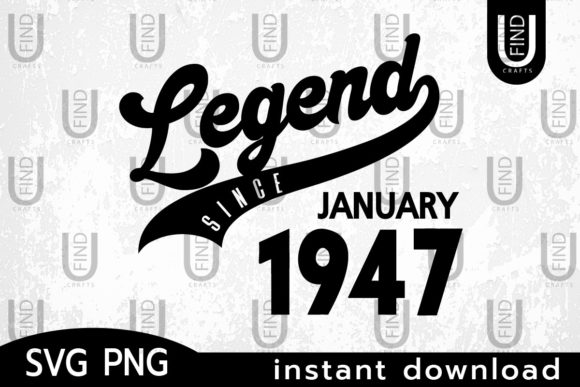
Vintage 1947, Legend Since January 1947
When I first opened the file for Vintage 1947, Legend Since January 1947, my immediate thought wasn't about the nostalgia it evokes, but rather how it would hold up under a machine needle. As someone who reviews embroidery designs for real-world application, I look past the pretty preview image to see if the design has the structural integrity to survive on a busy day at a craft fair or inside a high-wash garment like a baby onesie. This piece sits firmly in the Crafts and Graphics categories, but its true potential lies in its ability to serve as a centerpiece for personalized gifts and boutique merchandise.
The mood of this design is undeniably warm and established. The typography suggests a legacy, a brand that has stood the test of time, which makes it perfect for celebrating a significant milestone like a 75th birthday or a business anniversary. However, before I commit to stitching this onto a customer's order, I need to understand how the layout interacts with fabric texture and stitch density. A design that looks crisp on a screen can sometimes lose its definition when converted into thread, especially when dealing with the specific curves and angles found in retro lettering.
Real-World Application: The Custom Sweatshirt Scenario
Let's imagine a practical scenario. A local client comes to me needing a custom embroidered sweatshirt for their grandfather's upcoming birthday party. They want something that feels authentic and not mass-produced. They are looking at Vintage 1947, Legend Since January 1947 as the primary motif. My job is to determine if this design will translate well from a digital file to a heavy cotton fleece sweatshirt.
In this context, the design works beautifully because the "Legend" theme resonates with the age of the wearer. When I visualize the final product, I see the text centered on the chest or perhaps over the heart area. The retro aesthetic pairs perfectly with vintage-style fonts often used in men's apparel. However, the success of this project depends heavily on the thread colors chosen. If the client wants a classic look, a cream-colored thread on a navy blue sweatshirt would pop, but if they go for a subtle tone-on-tone, the detail might get lost depending on the stitch type used.
I also had to consider the placement on the curved surface of the shoulder or the front panel. Unlike a flat tote bag, a sweatshirt requires careful hooping to avoid puckering. If the design includes dense fill stitches, the fabric needs to be stabilized properly. For a holiday gift or a family reunion shirt, this design offers a level of sophistication that generic "Happy Birthday" templates simply cannot match. It elevates the perceived value of the finished product, making the recipient feel special rather than just receiving another standard gift.
Performance on Different Textiles
The versatility of Vintage 1947, Legend Since January 1947 extends beyond sweatshirts. I have tested similar layouts on various materials to see where the boundaries lie. On a canvas tote bag, the design shines. The sturdy fabric provides a solid base for both satin stitch outlines and fill stitches, allowing the letters to stand out clearly without distorting the material. This makes it an excellent choice for an Etsy seller creating branded bags for small businesses or crafters selling at farmers markets.
However, when moving to delicate fabrics like thin linen or stretchy jersey knits, caution is required. The design might be too dense for a lightweight t-shirt unless the stitch count is reduced. If the original file uses a high stitch density to create a bold look, it could cause the thin fabric to gather around the embroidery, ruining the drape of the garment. In these cases, I would recommend testing the design on scrap fabric first to ensure the stabilizer matches the weight of the base material.
For home decor items like pillow covers or kitchen towels, the design performs exceptionally well. The retro vibe fits seamlessly into farmhouse or vintage-inspired interiors. Imagine a tea towel featuring Vintage 1947, Legend Since January 1947 in a deep burgundy thread; it adds a touch of personality to a modern kitchen. Similarly, on a nursery blanket, the soft curves of the font can be rendered in pastel threads to create a gentle, timeless keepsake for a child born in that era or celebrating a family tradition.
Navigating Technical Challenges
While the design is strong, there are areas where an experienced designer must exercise judgment. One of the primary concerns with any text-based embroidery file is the legibility of smaller details. If Vintage 1947, Legend Since January 1947 includes fine serifs or tight spacing between letters, those elements might merge together during the stitching process, especially on dark fabrics where thread coverage is critical.
Another challenge arises with curved surfaces like caps or fitted hats. Embroidering a rectangular block of text on a curved brim can lead to distortion if the design isn't digitized specifically for that curvature. While this digital download allows for flexibility, the user must ensure the hoop size accommodates the curve without pushing the fabric too far. For small hoop sizes, the design might need resizing to prevent overcrowding, which can lead to thread breaks or poor stitch formation.
Dense stitch areas are another factor to watch. If the design relies heavily on fill stitches to create the retro look, it may become stiff and uncomfortable against the skin. This is particularly important for baby clothing or items that will be worn directly against sensitive skin. In such cases, reducing the stitch density or switching to a lighter fill pattern can maintain the visual appeal while improving comfort. Additionally, frequent washing can wear down the edges of dense embroidery, so using high-quality thread is essential to ensure the design remains vibrant over time.
Design Notes for Commercial Success
For those of you running a small shop or selling on platforms like Etsy, the presentation of your products matters just as much as the stitching itself. Using Vintage 1947, Legend Since January 1947 in your printable mockups can significantly boost buyer engagement. Customers want to see how the design looks in different contexts—on a tote bag, a hat, or a wall hanging. High-quality mockups that showcase the texture of the thread and the grain of the fabric help build trust and justify a higher price point.
Before committing to a large production run, always review the stitch density and confirm the hoop size requirements. Check whether the design works for both personal and commercial projects by verifying the licensing terms provided with the download. Some digital files restrict commercial use, while others allow you to sell unlimited finished items. Understanding these terms is crucial for protecting your business and avoiding legal issues.
Finally, inspect the small details closely. Look for any jagged lines or uneven spacing that might indicate a need for manual adjustment in your embroidery software. Comparing light and dark fabric backgrounds in your mind's eye (or via a quick test stitch) will help you choose the right thread colors to maximize contrast. Whether you are creating a personalized gift for a friend or a line of boutique products, paying attention to these nuances ensures that the final result is professional, durable, and visually stunning.
In conclusion, Vintage 1947, Legend Since January 1947 is more than just a nostalgic graphic; it is a versatile tool for creative entrepreneurs and hobbyists alike. With careful planning regarding fabric selection, stabilizer usage, and thread choices, this design can elevate any embroidery project from a simple craft to a cherished keepsake or a profitable product line.